
This article includes the following sections:
- 3.1 What is a Product? – Defines a product and its role.
- 3.2 How to Identify Unique Products – Explains how to distinguish products.
- 3.3 What is the Data Needed for Products? – Lists required fields for importing product data.
- 3.4 Dependencies on Other Entities – Describes links between products and other entities.
- Example of Some Product Data – Shows a sample spreadsheet of product data.
3.1 What is a product?
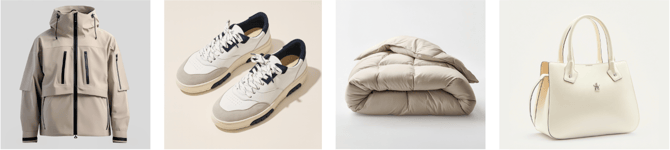
Product data covers all the finished goods items that you sell to your customers — from shoes and dresses to wallets and accessories. This represents the complete articles ready for sale that customers purchase from your brand.
3.2 How to identify unique products
Each product in our system needs a unique combination of identifiers. Unlike other data types that use a single reference, products require three key attributes to create uniqueness:
- productRef: Your internal unique identifier for the product style
- productColorCode: The specific color variant of the product style
- productCollectionRef: The collection or season the product belongs to
The key rule: If any of these three attributes differ, they represent distinct products in our system. Each unique combination will receive separate traceability, environmental analysis and calculations.
Let's illustrate this with an example:
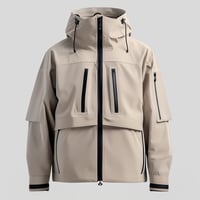
Consider a ZIPPED COAT with Product Reference ZC-001
-
-
If this coat is available in three different colors:
NAVY,BLACK, andGREY, and they are all part of yourWINTER 2025collection, Fairly Made considers these as 3 distinct products and will perform 3 distinct analysis:productRef colorCode productCollectionRef ZC-001 BEIGE WINTER 2025 ZC-001 NAVY WINTER 2025 ZC-001 BLACK WINTER 2025 -
If you renew this exact
ZC-001Zipped Coat in theWINTER 2026collection, still in the same three colors, these would be considered a further 3 distinct products and thus 3 new and additional analysis for that new collection:productRef colorCode productCollectionRef ZC-001 BEIGE WINTER 2026 ZC-001 NAVY WINTER 2026 ZC-001 BLACK WINTER 2026
-
Total result: The system would recognize 6 distinct products related to the ZC-001 style across both collections.
3.3 What data is needed for Products?
This section details each field required when importing product data. Understanding these fields, their definitions, and their constraints is essential for a successful data import.
All fields marked with ⭐️ are mandatory and fields marked with ★ are mandatory for some features.
💡 Need Help? If you don't have detailed information for some fields, contact your Fairly Made analyst for guidance on appropriate default values.
productRef ⭐
Your internal code or reference name for this product style. This code, along with the Color Code and Collection, makes each product unique in our system.
- Format: Letters and numbers accepted, maximum 70 characters
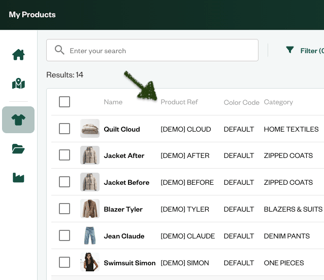
The reference of the product is displayed on Fairly Made App, along with the name
productCollectionRef ⭐
The name or reference of the collection the product belongs to at the time of analysis.
- Format: Letters and numbers accepted
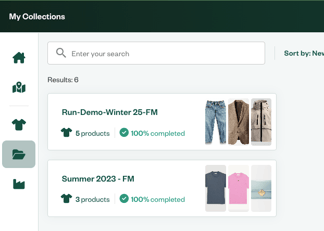
The collection is used to group your products on Fairly Made app

The collection allows you to filter your products
category ⭐
Select the product category from our predefined list that best describes this item (e.g., TSHIRTS, DRESSES, PROTECTIVE BOOTS).
Why this matters: The category determines which Fairly Made methodology basis we apply and affects default components assigned when specific composition data isn't available. It's also used in French Single Score for deadstock and average market price data points, and for display and filtering within the platform.
- Where to find options: Taxonomy PRODUCT_CATEGORY
- Important: The following values are not in the AGEC scope : NAPKINS, KITCHEN_POTHOLDER_GLOVES, WALLETS & CARD CARRIERS, TABLECLOTHS, CUSHIONS, TEDDY, PURSES, FOUTA, TOTE BAGS, ZIPPED POUCHES, SLIPPERS, HEELS (CLOSED), CURTAINS, RUG, FASHION BOOTS, CAPE, BEACH_BAGS, FLIP FLOPS, PROTECTIVE BOOTS, DUVETS, WATCH, OTHER BAGS, PONCHO, PERFUMES, BACKPACKS, CAPS, PROTECTIVE SHOES, PUSHCHAIR_SEAT_FABRIC, CHAIR_SOFA_COVERS, SNEAKERS, FORMAL SHOES, SANDALS, CUSHION_COVERS, BIBS, ACCESSORIES, JEWELRY, YOGA_MAT, HEELS (OPENED)
supplierRef ⭐
Your internal reference code for the supplier of this finished product. For Products data, indicate your finished product supplier (manufacturer or agent) who will be associated with the Manufacturing step.
Why this matters: The supplier referenced here will be contacted during Supplier Data Collection to gather information about their factory through the Supplier Form, since they're associated with the Manufacturing step at Product level. They may also receive Material Forms if they're used in Components data or if no Components are listed for this product.
- Format: Must exactly match an existing supplier reference from your supplier data
warehouseRef ⭐
Your internal reference code for the main warehouse where the product is stored. If you have multiple warehouses, indicate your main one here.
Why this matters: The warehouse address is used to compute the total environmental impact of the product, including transport to the warehouse as a final step.
- Format: Must exactly match an existing supplier reference from your supplier data (warehouses should be listed as suppliers)
reachCompliance ⭐
Indicates if the product complies with REACH regulations.
Why this matters: REACH compliance is mandatory for all companies that manufacture, import, or use chemical substances in the EU, including when these substances are part of mixtures or articles. This ensures regulatory compliance and consumer safety.
- Where to find options: Taxonomy REACH_COMPLIANCE
- Format: Must be "1" (compliant) or "0" (not compliant)
- Reference: See ECHA substances list for substances restricted under REACH
ecoModulation ⭐
The eco-modulation bonus or penalty linked to this product.
Why this matters: France's Extended Producer Responsibility (EPR) principle uses eco-modulation to reward companies for eco-design efforts or penalize those making end-of-life management difficult, directly affecting your costs and compliance standing. This information appears in AGEC showcases.
- Where to find options: Taxonomy ECO_MODULATION
- Common default: NONE is commonly used as a default option if information isn't available
producedQuantity ★
The total number of pieces produced for this specific product reference in the considered collection and color.
Why this matters: Produced quantity is used in Supply Chain Intelligence to compute the total amount of a material based on its sourcing.
- Format: Must be an integer
💡 Tip: This data can also be filled at category and year level directly in the Fairly Made app.
packagingRefs ★
Your internal reference codes for the packaging used with this product.
Why this matters: Links packaging references to products and is necessary to display mandatory allegations that AGEC law requires for packaging on product showcases.
- Format: References must already exist in your packaging data
- Multiple packaging: Use semicolon ";" to separate multiple references
productColorCode
The code or reference for the product's color.
- Format: Letters and numbers accepted, “string” type field
- Common default: Use DEFAULT if there's no specific color, or if left blank, it will be set to DEFAULT
name
The internal name of the product as it will appear within the Fairly Made platform interface.
- Format: Any text or numbers accepted
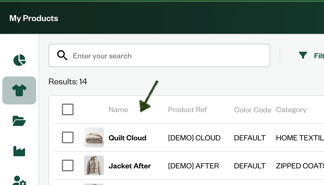
The name of the product is displayed on Fairly Made App
publicName
The name of the product that will be displayed publicly in product showcases.
- Format: Any text or numbers accepted
- Common default: The public name can be the same as the name
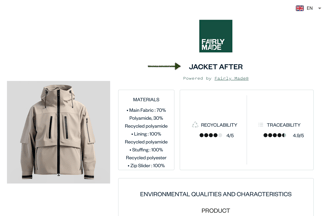
The public name is displayed in the public showcase of your product
purchaseOrder
The purchase order number for the product.
- Format: Letters and numbers accepted
weight
The weight of the product in grams.
Why this matters: Product weight is used in computing environmental impact calculations and affects LCA results, thus influencing your French environmental cost.
- Format: Numbers accepted (decimals allowed), should be between 5 and 10000
💡 Need Help? Since this is not mandatory, if you don't have this information, we'll apply a weight based on the product category using our Framework.
composition
The material composition of the product, as stored in your systems.
- Format: Any text or numbers accepted
- Important: This field is not used to compute product impact; individual component compositions are used instead for calculations
certifications
Certificates or labels for the finished product itself (not for materials or suppliers).
Why this matters: Product certifications are visible on your product pages and can appear on your showcases, demonstrating compliance with environmental, social, or quality standards.
- Where to find options: Taxonomy PRODUCT_CERTIFICATIONS_LABELS
- Multiple certifications: Use semicolon ";" to separate multiple certifications
 The product certification is displayed in the product information
gtinsOrEans
The list of GTIN codes associated with the product.
Why this matters : Allows Fairly Made to declare your French Environmental Cost to the official government portal and ensures it can be displayed on your eligible products showcases, if you have delegated this responsibility to us. See more here.
- Multiple values: Use semicolon ";" to separate multiple GTINs
- Format: 8, 12, 13, or 14 digits
- Important: the French Government portal only accepts the 13-digit format for the deposit of the French Environmental Cost Score.
manufacturingAssemblyCountry
The country where the product was last manufactured or assembled.
Why this matters: Allows data transfer when the supplier linked at product level is based in another country (agents, traders, groups) and ensures compliance with AGEC law for manufacturing steps (Manufacturing for ready-to-wear and Assembly, Finishing and Stitching for shoes).
- Where to find options: Taxonomy COUNTRY
- Format: ISO 3166-1 alpha-2 country codes
3.4 Dependencies on other entities
Suppliers
The Product data includes references to suppliers via the supplierRef and warehouseRef fields.
For your product import to be successful, the reference codes you provide in the supplierRef and warehouseRef columns must exactly match reference codes of suppliers that you have already imported into the Fairly Made system via the SUPPLIERS data tab.
The system uses these reference codes (supplierRef and warehouseRef) to look up and link the product to the corresponding supplier entries already in its database.
Packaging
The Product data includes a field, packagingRefs, to link products to the packaging materials used.
Similar to suppliers, for your product import to be successful, the reference codes you provide in the packagingRefs column must exactly match reference codes of packaging items that you have already imported into the Fairly Made system via the PACKAGING data tab.
Remember from section 3.3, if a product uses multiple packaging types, you will list their references separated by a semicolon ";" in the packagingRefs field. All individual references within that semicolon-separated list must exist in your imported Packaging data.
Ensuring Data Linkage
The timing of when you imported the Supplier and Packaging data does not matter, provided the references are consistent. What is important is that before you import a Product make sure that associated supplierRef, warehouseRef, and packagingRefs are already created and exist in the system from previous SUPPLIERS and PACKAGING imports.
Example of some products data
Below is a short example showing what a portion of your import data might be like for a few products, illustrating some of the fields described above:
| Field name | ⭐️ Mandatory | Field Description | Example 1 | Example 2 | Example 3 |
| productRef | ⭐️ | Your internal code or reference name for this product style | ZC-001 | DP-005 | S-010 |
| productCollectionRef | ⭐️ | The name or reference of the collection the product belongs to at the time of analysis | WINTER 2025 | SUMMER 2025 | SPRING 2025 |
| category | ⭐️ | The category of the product | ZIPPED COATS | DENIM PANTS | SNEAKERS |
| supplierRef | ⭐️ | Your internal reference code for the supplier of this finished product | AGENT A | SUP-B |
Manifattura Imaginata |
| warehouseRef | ⭐️ | Your internal reference code for the main warehouse where the product is stored | MainWarehouse |
WH-PARIS | WH-MILAN |
| reachCompliance | ⭐️ | Indicates if the product complies with REACH regulations. REACH compliance is mandatory for all products commercialized in European Union | 1 | 1 | 1 |
| ecoModulation | ⭐️ | The eco-modulation bonus or penalty linked to this product | REFASHION TLC - ECO-MODULATION 1 - DURABILITY | REFASHION TLC - ECO-MODULATION 3 - % RECYCLED MAT | ECOLOGIC ASL - CRITERIA 2 + 3 |
| producedQuantity | Highly recommended, ★ needed for Supply Chain Intelligence | The total number of pieces produced for this specific product reference in the considered collection and color | 1500 | 2000 | 500 |
| packagingRefs | Highly recommended, ★needed for AGEC compliance | Your internal reference codes for the packaging used | BOX01 ; POLY03 | POLY03 | BOX01; DUST13 |
| productColorCode | The code or reference for the product's color |
BEIGE | DEFAULT | ||
| name | The internal name of the product as it will appear within the Fairly Made platform interface | Zipped coat After | Jeans Claude | ||
| publicName | The name of the product that will be displayed publicly | JACKET AFTER | SNEAKERS NOAH | ||
| purchaseOrder | Highly recommended | The purchase order number for the product | 1122 | PO-5566 | |
| weight | Highly recommended | The weight of the product in grams | 575 | 612 | 850 |
| composition | The material composition of the product, as stored in your systems | Outer: 70% Polyamide, 30% Recycled polyamide. Lining: 100% Recycled Polyamide | DENIM - 98% ORGANIC COTTON 2% ELASTANE | Upper: Leather. Lining: Organic cotton. Insole: Recycled Polyester. Outsole: Natural rubber. | |
| certifications | Highly recommended (if any) | Certificates or labels for the finished product itself (not for materials or suppliers) | GRS ; OEKO-TEX STANDARD 100 | GOTS | LEATHER WORKING GROUP |
| gtinsOrEans | Highly recommended | The list of GTIN codes associated with the product | 012345678905 | 012345678905;123456789101 | |
| manufacturingAssemblyCountry | Highly recommended | The 2-letter country code (ISO 3166-1 alpha-2) where the product was last manufactured or assembled | IN | IT |