
We have developed an internal calculator that evaluates a product’s recyclability potential by considering the specific obstacles of the recycling process. This score, rated from 1 to 5, is determined based on the recycling method used, the type of product, and its ease of being shredded into fibers to be reused.
In the best-case scenario, the product can be efficiently shredded into fibers to produce yarn, making it the optimal recycling method.
When recycling is more difficult due to the presence of disruptive elements, the product is shredded and used for insulation, padding, or geotextiles. This method is considered “downcycling” because the fibers are turned into lower-value products, which lowers the Fairly Made® score. If fiber recycling is even more challenging, the fibers may be incinerated for energy recovery. This process does not result in the creation of new products, thus further reducing the score.
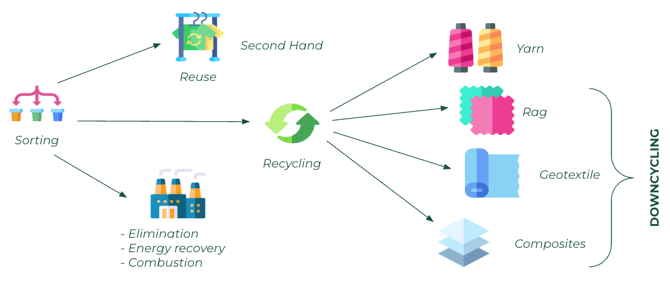
Our Recyclability Score aims to provide a clear assessment that encourages optimal recycling practices.
You can find Fairly Made® methodology below :
-
If the product is made of a single component and one material: 5/5.
💡 Indeed, this product is very simple and can be recycled with defibration and transformed into new yarn.
-
If the product is made of multiple components or has disruptors such as a zip, buttons … : 4/5
💡 Indeed, more energy and effort are required to recycle and to fray the product. After this process the textile can be used as insulation, geotextiles or padding. These products have less added value than yarn which explains the lower score.
-
If the product contains elastane: 1/5
💡 Elastane is a fibre which complicates fibre recycling. It is almost impossible to recycle products with elastane, especially if the composition contains more than 5% of this material.
-
If the product is a shoe or a bag : 1/5
💡 Shoes and bags are highly complex products, typically consisting of numerous components—on average, 23 per shoe. These products often incorporate metal and plastic parts, which complicate the recycling process and make them harder to recycle.
This score, while still subject to improvement, gives you a first indication of your products’ recyclability—even before the legislative requirements for recyclability claims under the AGEC law come into effect. It is challengeable and adaptable, helping you anticipate these requirements and adopt increasingly responsible practices.