1. Meeting Regulatory Requirements
As global regulations around sustainability and ethical practices become more stringent, brands need robust tools to ensure compliance. Fairly Made’s traceability platform provides the necessary data to meet these evolving regulatory demands seamlessly.
In France
The AGEC Law (Anti-Waste for a Circular Economy)
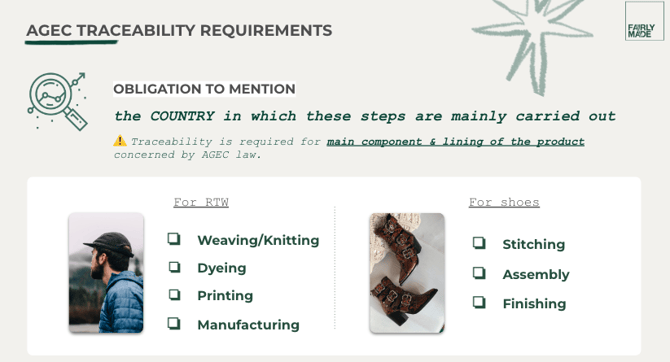
France’s AGEC Law mandates that brands display traceability information on textile and leather products. This requirement aims to promote transparency and accountability in the fashion industry. Fairly Made’s platform can help brands collect and display required data by providing clear, accessible information about the origins, production processes, and sustainability practices of their products.
Eco-Score
The Eco-Score system evaluates the environmental impact of products, with traceability information playing a crucial role in calculating the score. By leveraging Fairly Made’s platform, brands can identify and implement changes in the supply chain to improve the environmental impact and achieve better Eco-Score ratings.
In Europe
Ecodesign
Fairly Made’s traceability data can support brands by providing insights into materials and processes that help design products with minimal environmental impact, as well as offering detailed documentation of sustainable practices to meet Ecodesign regulatory requirements.
Product Digital Passport
The Product Digital Passport initiative aims to provide comprehensive product information digitally. Fairly Made’s platform can help brands create digital records, incorporating traceability information to enhance transparency, and facilitate information sharing, ensuring that consumers and regulatory bodies have easy access to verifiable product information through digital means.
Green Claims
Green Claims regulations require substantiated and transparent environmental claims. With Fairly Made’s traceability data, brands can provide concrete evidence to back up sustainability claims, reducing the risk of misleading advertising.
In the USA / Worldwide
The Fashion Act - New York State
This act demands greater transparency and social accountability from fashion brands. Fairly Made’s platform can assist brands in utilizing traceability data to meet the Act’s requirements, offering detailed reports on sourcing, labor conditions, and environmental impact.
UFLPA: UYGHUR FORCED LABOR PREVENTION ACT
The UFLPA aims to prevent products made with forced labor from entering the U.S. market. Fairly Made’s traceability platform can help brands ensure ethical sourcing and avoid sanctions by tracking and verifying that no part of the supply chain involves forced labor, particularly in high-risk regions, as well as providing documented proof of ethical sourcing practices to comply with UFLPA requirements and avoid potential sanctions or import bans.
2. Communicating Transparency to Consumers
Transparency is a key driver of trust. Brands can use the detailed traceability reports from Fairly Made to create compelling narratives about their products. Social media posts, blog articles, and video content that tell the story of a product's journey from farm to closet can engage and educate consumers. QR codes on product tags that link to detailed traceability information can provide on-the-spot transparency for in-store shoppers.
3. Improving Supply Chain Accountability
Fairly Made's platform not only provides transparency for consumers but also helps brands improve their supply chain management. By identifying every step in the supply chain, brands can pinpoint areas for improvement, ensure compliance with ethical standards, and work towards minimizing environmental impact. This proactive approach can lead to better supplier relationships and more efficient operations.