The Fairly Made API provides two main GET endpoints to access product sustainability data: one for public-facing showcase information and another for comprehensive analysis details. This guide explains what data each endpoint returns and how they differ.
Overview of the Two Endpoints
1. Get Study Showcase - Public Communication Data
🔗 This endpoint returns the information displayed in Fairly Made's public product showcases - the standardized product sheets accessible via your website or QR codes. This is the data intended for end-customer communication.
2. Get Study Details - Complete Analysis Data
This endpoint (🔗 by unicity criteria or 🔗 by id) returns the full dataset from Fairly Made's analysis, including all 16 environmental impact criteria and detailed technical information not shown in public showcases.
Get Study Showcase Endpoint
Purpose
Retrieve the information that appears in your public product showcases for customer-facing communication.
Key Data Returned
General Product Information
- Product name
- Picture link

Data location on showcase :
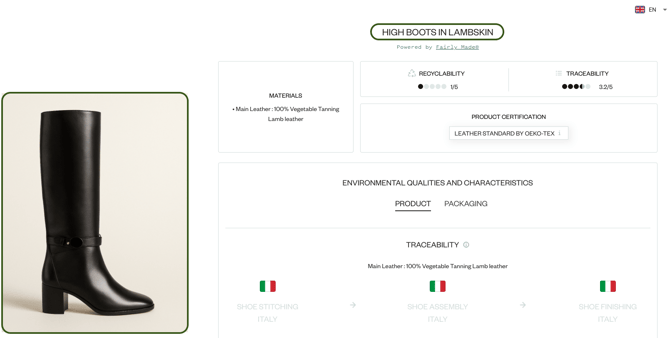
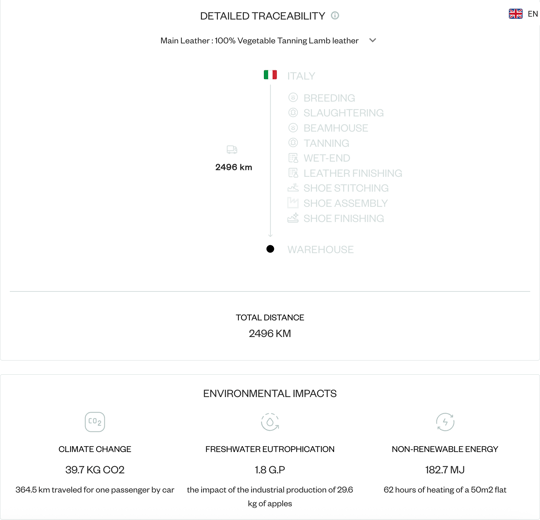
Traceability & Impacts Details
- Component-by-component traceability information

- Key environmental impacts (3 indicators from the 16 analyzed)
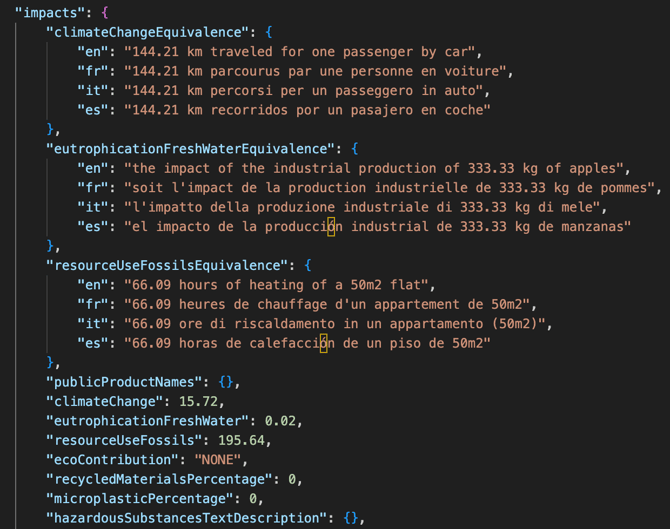
- French Environmental Cost details
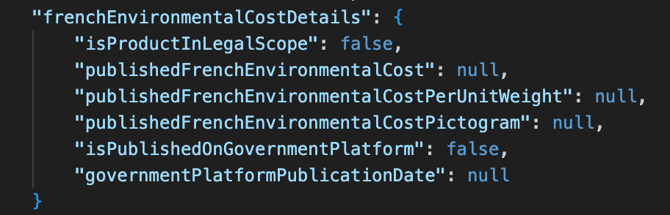
Data location on showcase:
Example of the French Environmental Cost display (on the French language version), before the impacts details:
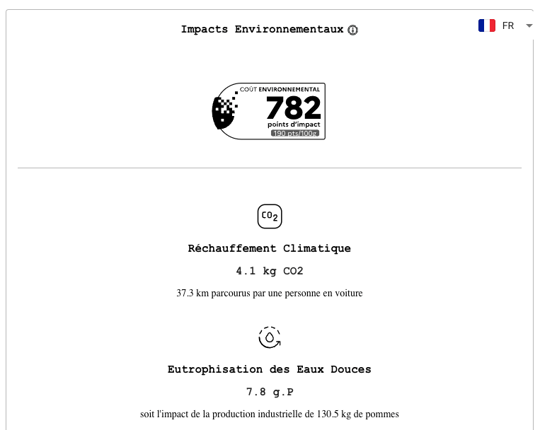
💡Consult this article to learn everything about this Cost and its methodology.
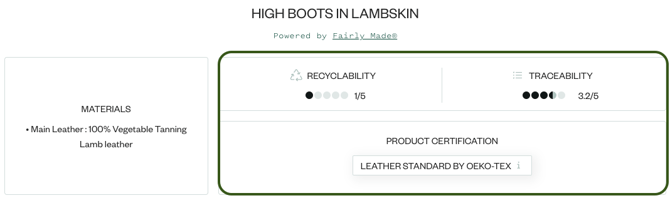
Product Grades & Certificates
- Fairly Made grades (if you wish to display them)

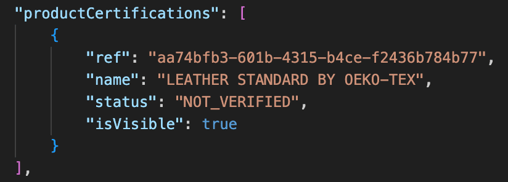
- Product certifications
Data location on showcase:
AGEC Law Compliance Data
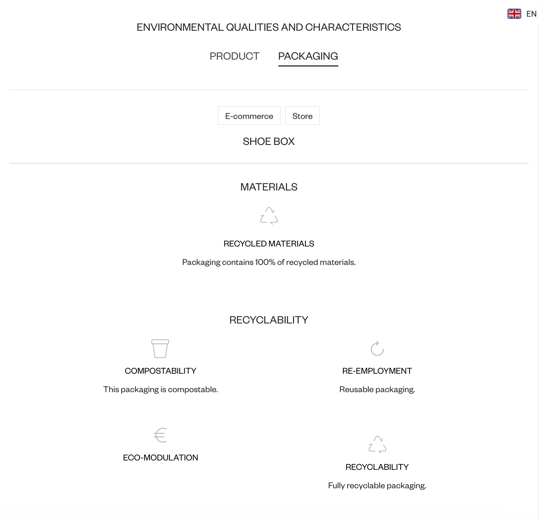
For Packaging:
- Description of each packaging type used
- 5 possible AGEC claims specific to packaging
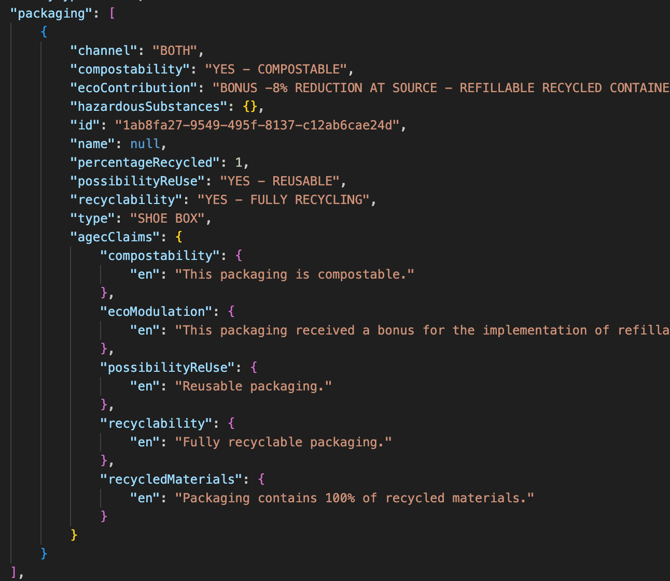
Data location on showcase :
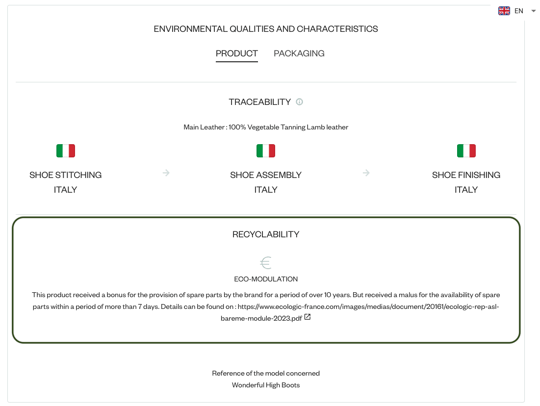
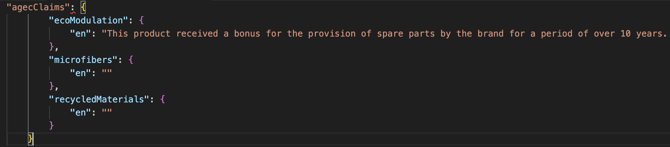
For the Product:
- AGEC claims (e.g., eco-modulation bonuses for spare parts provision), 3 possible :
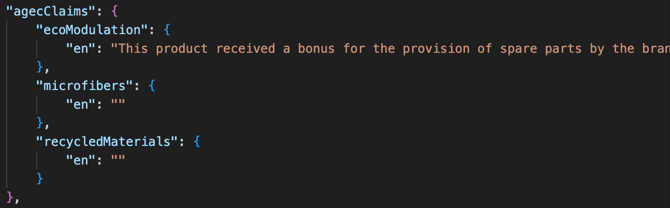
Data location on showcase :
Get Study Details Endpoint
Purpose
Access the complete analyzed dataset including all technical details and environmental metrics not displayed in public showcases.
Key Data Returned
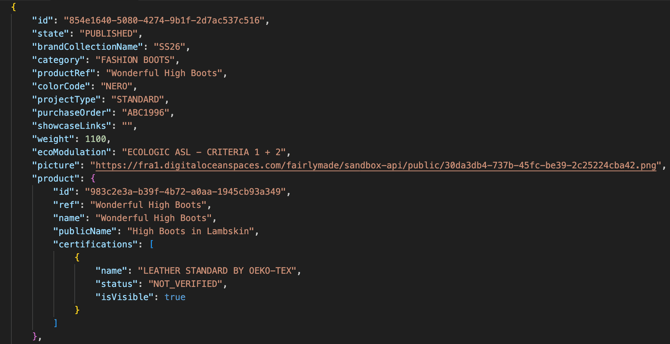
General Product Fields
- General product data and identification
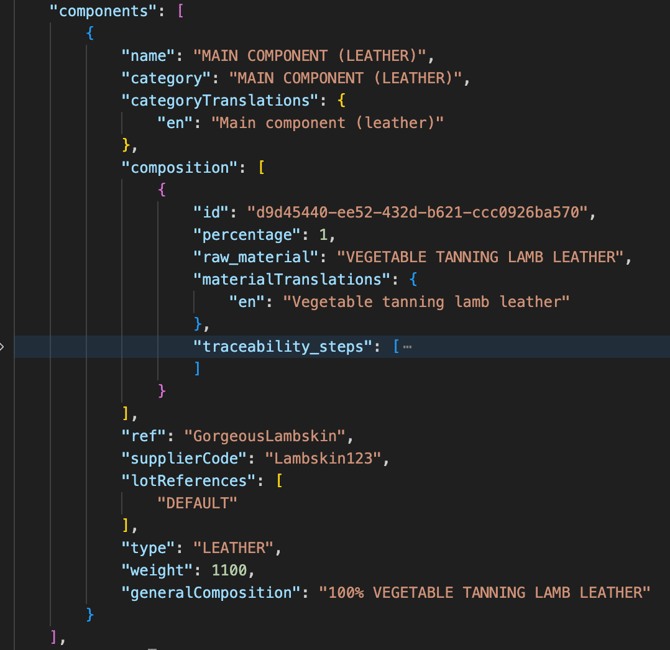
Component Details
- Composition and traceability detailed by component (main material, linings, etc.)
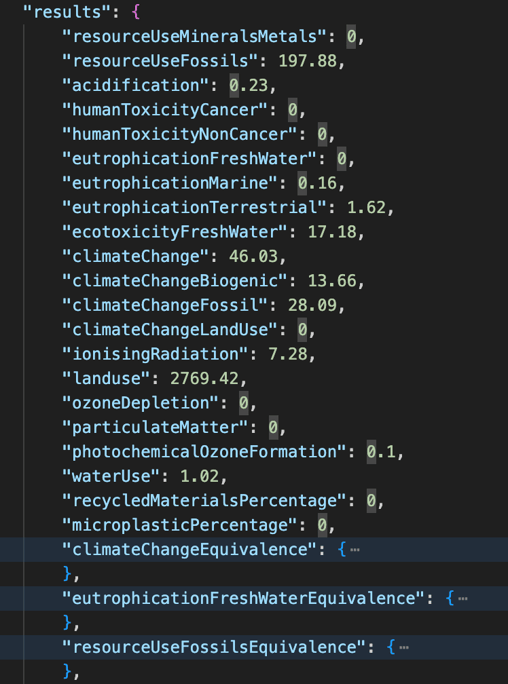
Complete LCA Results - French Methodology
- All 16 environmental impact criteria, under the French Methodology:
- Resource use (minerals/metals, fossil fuels)
- Acidification
- Human toxicity (cancer/non-cancer)
- Eutrophication (freshwater/marine/terrestrial)
- Ecotoxicity (freshwater)
- Climate change
- Ionizing radiation
- Land use
- Ozone depletion
- Particulate matter
- Photochemical ozone formation
- Water use
- And equivalences for climate change, eutrophication freshwater and resource use fossils.
Fairly Made Grades
- Detailed scoring breakdown (scored out of 5)

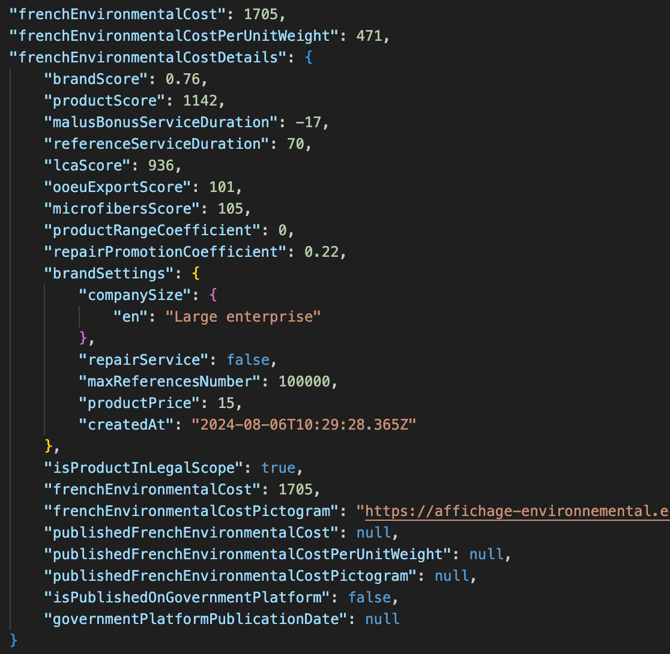
French Environmental Cost
- French Environmental Cost details
- Detailed cost breakdown
-
Only values prefixed with "published" are considered official. You must use the field
publishedFrenchEnvironmentalCostPictogram. -
The fields prefixed with
frenchEnvironmentalCostrepresents our internal calculation via Ecobalyse and is not an official publication. -
Use the
isPublishedOnGovernmentPlatformfield (true/false) to confirm a score's publication status.
💡Consult this article to learn everything about this Cost and its methodology.
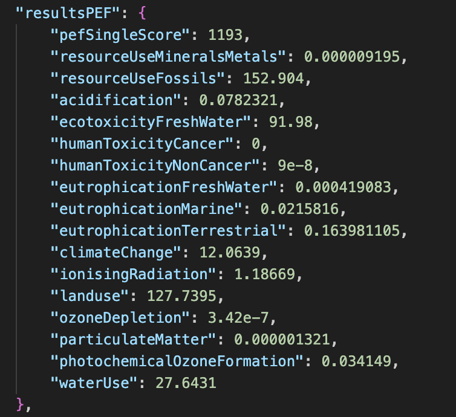
Complete LCA Results - PEF Methodology
- PEF Single Score
- All 16 environmental impact criteria, under the PEF Methodology (European):
- Resource use (minerals/metals, fossil fuels)
- Acidification
- Human toxicity (cancer/non-cancer)
- Eutrophication (freshwater/marine/terrestrial)
- Ecotoxicity (freshwater)
- Climate change
- Ionizing radiation
- Land use
- Ozone depletion
- Particulate matter
- Photochemical ozone formation
- Water use
Digital Assets
- Links to Fairly Made QR codes

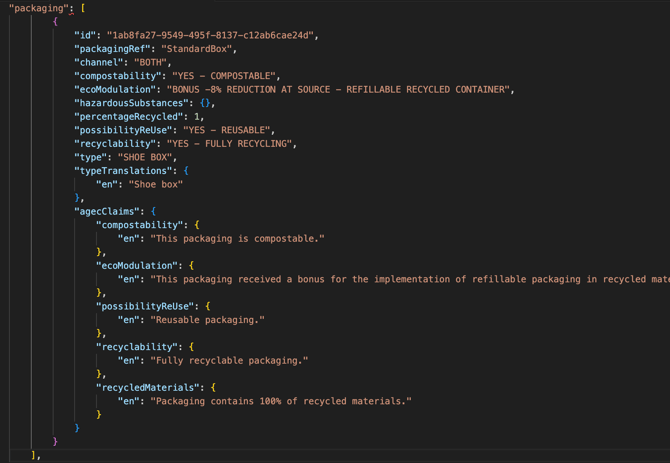
Detailed Packaging Analysis
- Complete packaging specifications
- 5 possible AGEC claims for packaging
Product AGEC Claims
- 3 possible product-specific AGEC claims
Market Segment
Data Availability
- The Get Study Showcase Endpoint is only accessible once the product has been analysed by Fairly Made and has a status of either 'PUBLISHED' or 'COMPLETED'.
Both endpoints require that:
- You have valid API authentication credentials
🔗View a live example of a product showcase here.
Next Steps
To integrate these endpoints:
- Review the JSON response examples (here)
- Identify which data fields you need for your use case
- Implement the appropriate endpoint in your application
- Test with sample product studies
For technical implementation details, API authentication, and endpoint specifications, please refer to the Fairly Made API documentation.