I. Why the PEF matters for apparel brands
Europe’s standard for measuring and improving product impact
The Product Environmental Footprint (PEF) is Europe’s science-backed method to measure the environmental impact of products from raw materials to end-of-life. For apparel and footwear, the PEF Category Rules (PEFCR) provide clear, sector-specific guidance, so brands can compare products fairly and make decisions based on real data.
Context
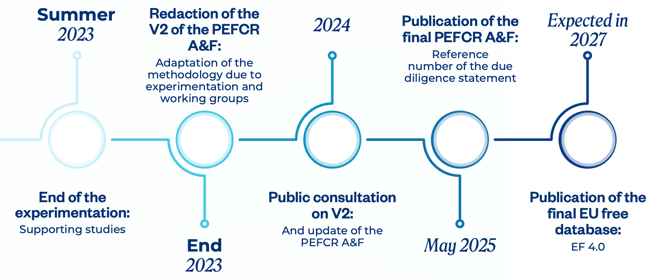
The Product Environmental Footprint (PEF) was created by the European Commission to provide a single, consistent way to measure the environmental impact of products across Europe.
First introduced in 2019, the PEF framework underwent public consultations on methodology updates in 2024 before being finalized in 2025, with a free EF database expected in 2027. In 2019, the Product Environmental Footprint Category Rules (PEFCR) for Apparel and Footwear were established.
Why brands should embrace PEF today
-
See the full picture: The PEF looks beyond single impact criteria. It tracks a variety of environmental indicators so you understand trade-offs, bringing all dimensions together.
-
Build trust and transparency: Standardized rules mean results are verifiable and comparable. Consumers, auditors, and regulators can trust your claims.
-
Stay ahead of regulations: The PEF aligns with several European regulations, which recognize it as a valid methodology. Using it now positions your brand for upcoming compliance requirements.
II. 16 environmental indicators that count
See the full picture of your product’s impact
The PEF measures product performance across 16 scientifically defined impact categories. These categories are selected to capture impacts on climate, ecosystems, human health and resource use. The objective is not to denigrate single-indicator approaches, but to provide a multi-dimensional, balanced assessment that prevents misleading trade-offs. For example, a material can be low in carbon but high in water use; the PEF surfaces both factors so decisions are evidence-based and nuanced.
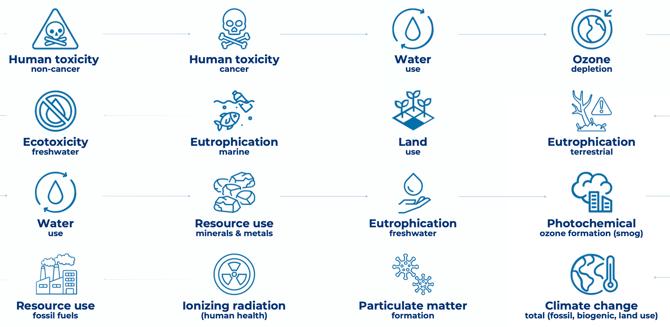
Each category is quantified using EF-compliant impact factors and then weighted to obtain a comprehensive assessment. PEFCR A&F v3.1 adds parameters for durability, repairability, and a dedicated fiber-fragment (micro-fiber) impact section, recognizing use-phase and post-use impacts as significant for textiles.
III. How the PEF calculation works
Steps considered and data requirements
At its core, a PEF study is a Life Cycle Assessment (LCA) that establishes a specific study framework
for textiles so that the results are comparable and reliable. For apparel and footwear, this uses the EF
3.1 reference package, which contains verified data for materials, energy, and processes.
How the calculation works
A PEF study tracks environmental impacts across five main lifecycle stages (LCS):
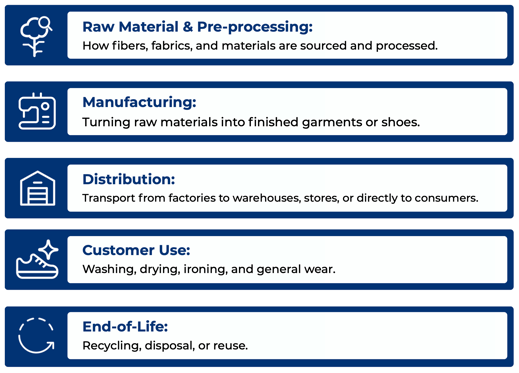
Optional stages, like capital goods (machines used to make the product) or resale scenarios, can be added for more advanced assessments.
Data requirements for PEF studies
PEF studies rely on two types of data:
- Primary Data – Company-specific information from your own operations or suppliers. It reflects the actual materials, processes, and supply chain of the product.
- Secondary Data – Industry averages or published statistics used when primary data is not available. Generic datasets come from the EF 3.1 database, and PEFCR A&F provides default values.
The PEFCR A&F defines three categories of data requirements:
- Mandatory primary data – must be collected.
- Primary data if available – otherwise, use secondary defaults.
- Imposed secondary data – mainly for the use phase.
Understanding methodology differences:
Functional unit: The impact is measured per use (e.g., one day of wear), which makes durability and repairability
critical. Longer-lasting garments reduce the per-use environmental footprint.
IV. PEF in practice and policy
A standardized approach for transparency and regulatory compliance
A growing legal landscape
The PEF methodology is directly referenced in major EU sustainability frameworks, including:
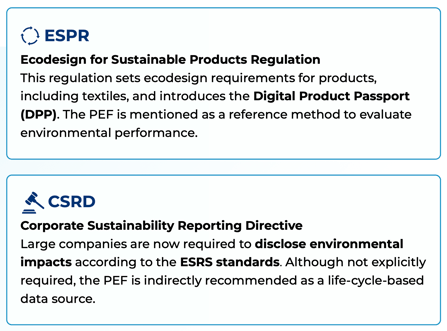
In practice
For apparel brands, the PEF enables:
- Regulatory readiness at EU level.
- Data supporting decisions related to impact.
- Internal benchmarking to prioritize sustainability efforts.
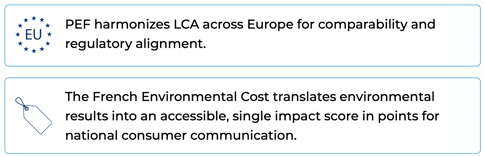
French Environmental Cost: a different approach
On May 16, 2025, the French Ministry of Ecological Transition announced that the country’s environmental labeling scheme, based on the French Environmental Cost, was officially notified to the European Commission
without opposition.
Included in Article 2 of the Climat et Résilience law, this methodology uses the same LCA-based principles as PEF with some adjustments.
The main difference is its purpose:
V. Bring PEF into your daily workflow
Access, understand, and apply PEF insights across your product range
Fairly Made has actively participated in PEF technical working groups and public consultations, contributing to the PEFCR development. The platform translates PEF’s technical framework into a usable, verifiable workspace so brands can move from compliance toward measurable decisions.
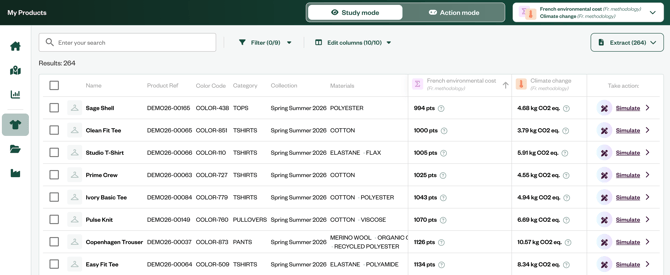
1. Impact overview
- View environmental impact for each product according to the indicator of your choice.
- Instantly evaluate environmental impacts on one page
for easy comparison.
2. Impact breakdown
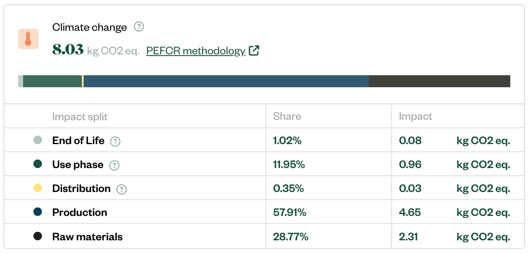
- Access the impact breakdown tab for each product to explore lifecycle stages.
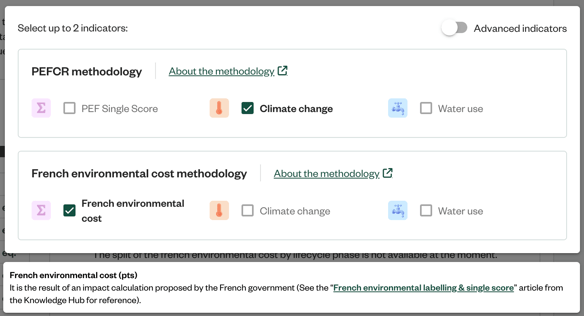
- Display up to 2 indicators simultaneously to analyze side-effects and trade-offs.
- Dive into detailed impact information, including the PEF score and weighting of
each impact indicator.
3. Methodology viewpoint
- Select any of the 16 indicators from the French or European methodology.
- Compare the same indicator across both methodologies for a clear side-by-side view.
- Benefit from in-app tooltips and Knowledge Hub articles for expert guidance and context.
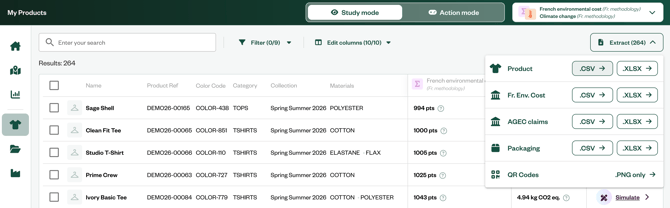
4. Extract the data you need
- Use the extract button to export all the data you need: to get the PEF results, select the "Product" extract